Residency
Creative Garden Residency
MFA research · Hungary · 2023
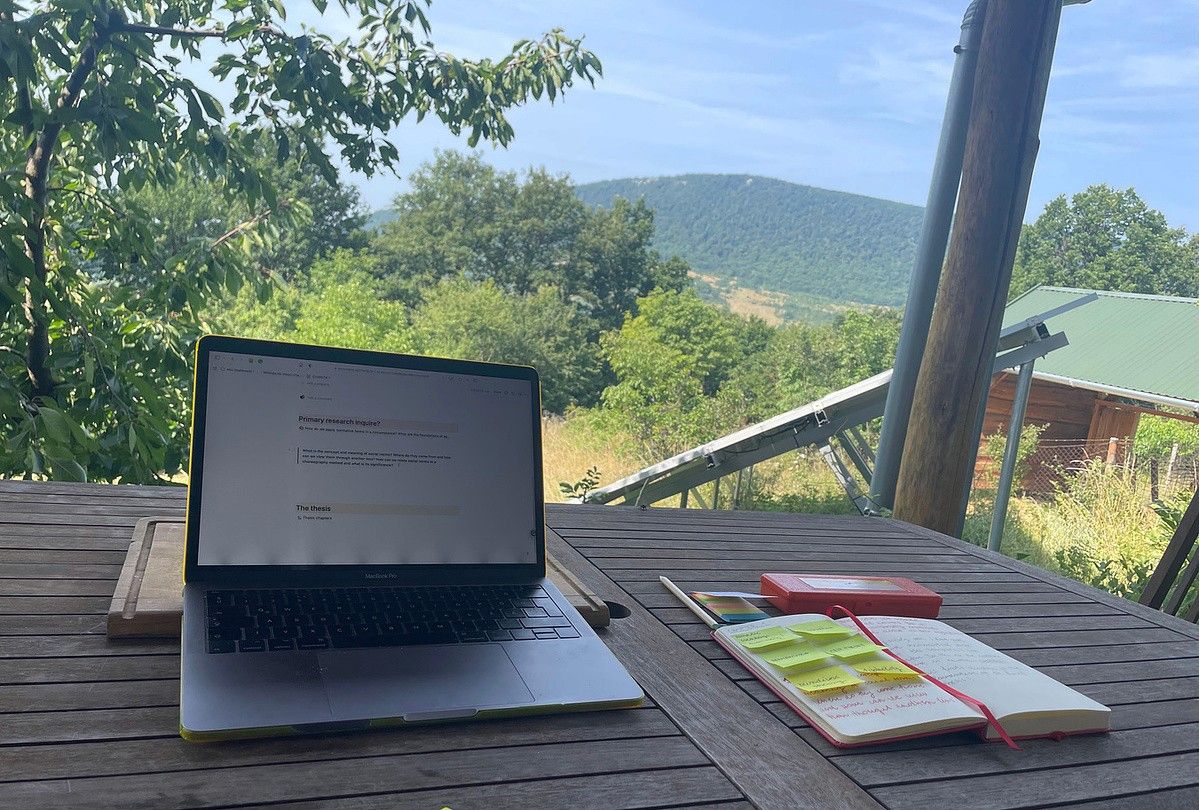
A period of reflection and thesis writing that clarified questions of embodied difference, perception, creativity, and social norms.
During my residency at Creative Garden, I intended to write a short reflection at the end of each day. Instead, I found myself needing distance from the intensity of the previous months. When I sat in front of the computer, I often had little energy to write. Looking back, these notes became less of a daily journal and more of a record of a gradual shift in my thinking.
Day 1
The first day brought an overwhelming sense of relief. Away from the city, the constant noise, and the relentless flow of conversations on trains and streets, I rediscovered silence. Surrounded by nature, I no longer needed to seek moments of stillness—they were already present. Sitting on the balcony, listening to the rain and the distant sounds of the surrounding landscape, became part of the residency itself.
Day 2
I spent the day reorienting my research. After presenting my MFA graduation performance at Trinity Laban, I had consciously stopped thinking and talking about the work. I realised I needed time before returning to it through writing.
Day 3
The research question finally became clear. I realised that I had been researching backwards: the practical work had already happened, yet the conceptual framework was only beginning to emerge. Writing the thesis while simultaneously creating the graduation performance had felt impossible. Only once the work had been presented could I begin to understand what I had actually made.
Day 4
The theoretical framework started to take shape. I identified the key concepts that would guide the thesis and drafted a working title: Outside(r) and Inside(r): Creative Methodologies for Division Performance Practice. Although the title would later evolve, this marked an important turning point in understanding the direction of the research.
Day 5
I immersed myself in literature examining concepts of normality, heteronormativity, neurotypicality, and embodied difference. Collecting books, articles, films, and references generated new questions rather than definitive answers. Among the ideas I encountered, the concept of neuroqueer resonated deeply—not as an identity category, but as a way of thinking differently about bodies, perception, creativity, and social norms.
With two days remaining at Creative Garden, I left with more questions than answers, but with a renewed sense of clarity about the research that would continue beyond the residency.
Creative Garden Residency · Pilisszentkereszt, Hungary · 28 July 2023